
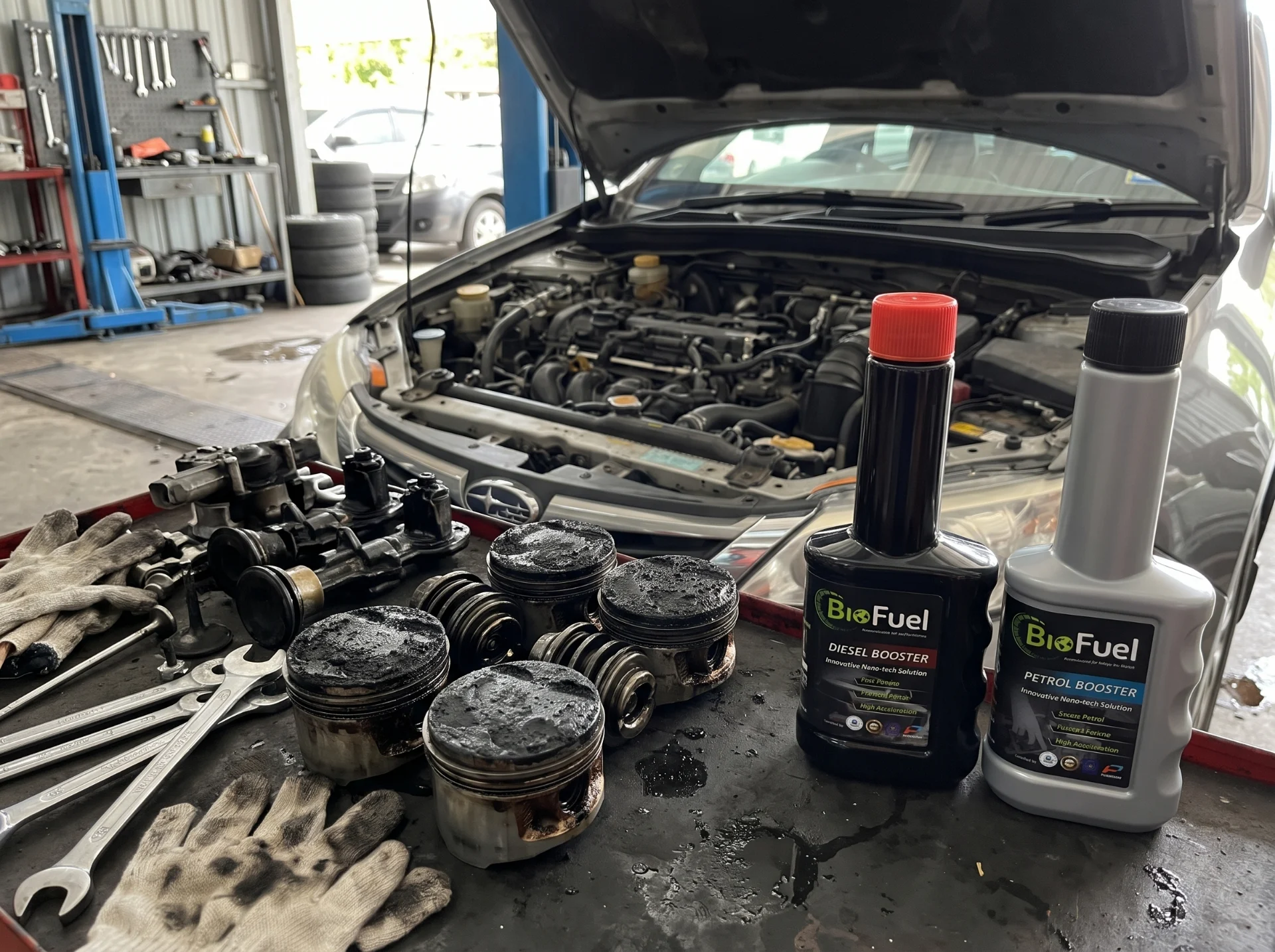
For most car owners, after a vehicle reaches a certain age or mileage, you will often encounter this scenario: The car doesn't feel as responsive as before, acceleration feels sluggish, fuel consumption increases noticeably, and there is even a slight vibration while idling.
When you send it to a workshop, the mechanic will usually tell you: "Your engine has carbon buildup and needs a clean."
So, how exactly are carbon deposits formed? Which of the various cleaning methods on the market are actually reliable? And how should we handle daily prevention and maintenance? Today, let's explore the practical insights of engine carbon cleaning from an objective, scientific perspective.
I. What Are Engine Carbon Deposits and How Are They Formed?
Simply put, carbon deposits are residues left behind by the incomplete combustion of fuel and lubricating oil under high temperatures.
Whether you drive a traditional internal combustion engine or a modern turbocharged vehicle, microscopic hydrocarbon residues are inevitable as long as the engine is running. These residues gradually adhere and accumulate on key components:
- Fuel Injectors: Affects fuel atomization, leading to incomplete fuel combustion.
- Intake Valves: Restricts normal airflow into the engine, reducing intake efficiency.
- Combustion Chamber (Piston Tops, etc.): Alters the compression ratio, triggering engine knocking or power loss.
Why do some cars accumulate carbon faster? This is closely tied to your daily driving environment. For instance, urban commuting conditions in Malaysia—frequent traffic lights, prolonged stop-and-go traffic, short-distance trips (turning off the engine before it reaches normal operating temperature), and long-term low-speed driving—are prime catalysts for incomplete fuel combustion and accelerated carbon formation.
II. Common Symptoms of Carbon Buildup: Does Your Car Need Cleaning?
When your beloved car exhibits the following signals, it usually means carbon buildup has accumulated enough to affect vehicle performance:
- Significant Increase in Fuel Consumption: The same amount of fuel yields a shorter driving distance.
- Sluggish Acceleration & Loss of Power: Throttle response becomes delayed, reducing confidence when overtaking.
- Hard Cold Starts or Idling Vibration: Noticeable body shaking during initial startup, or requiring multiple ignition attempts.
- Pungent Exhaust Odor or Higher Emissions: Unusual or sharp smells from the tailpipe.
III. Pros and Cons of Mainstream Carbon Cleaning Methods
The automotive aftermarket generally offers several mainstream approaches to cleaning carbon:
1. Engine Disassembly (Traditional Overhaul / Deep Physical Cleaning)
- Method: Dismantling engine components such as the cylinder head, using physical tools or chemical solvents to scrape and wash away carbon.
- Pros: The most thorough cleaning effect, providing immediate results for severe, stubborn carbon buildup.
- Cons: High labor costs and expensive. Frequent engine dismantling causes wear and tear on component seals and assembly precision. Generally not recommended unless conditions are severe.
2. Non-Disassembly Cleaning / Hydrogen-Oxygen Decarbonizing / "IV Drip" Cleaning
- Method: Feeding cleaning fluids through the intake manifold during idling, or utilizing hydrogen-oxygen machines for high-temperature gas-phase cleaning.
- Pros: No need to dismantle the engine; takes less time.
- Cons: Limited effectiveness on heavy carbon buildup. Improper use of highly corrosive cleaning agents can also place a heavy burden on the catalytic converter or oxygen sensors.
3. Using High-Quality Fuel Enhancers / Additives (Prevention & Gentle Maintenance)
- Method: Pouring high-concentration, premium-formulated fuel additives into the fuel tank prior to refueling, allowing them to flow with petrol into the combustion system to gently dissolve, peel off, and wash away carbon during daily driving.
- Pros: Time-saving, effortless, economical, and convenient. No need to visit a workshop specifically; dynamic maintenance of the entire fuel system happens right as you refuel. It removes light-to-moderate carbon while inhibiting new deposit growth.
IV. A Convenient New Choice for Care: How BioFuel Helps Engines Fight Carbon
To help car owners escape tedious and costly periodic overhauls while solving efficiency losses caused by carbon, BioFuel—a locally developed and manufactured high-performance fuel booster—is gaining popularity among car owners who value scientific vehicle care.
From a scientific and engineering optimization perspective, the core advantages of BioFuel include:
- Active & Gentle Carbon Removal: Its highly concentrated formula works while the fuel system operates, not only dissolving and clearing existing carbon deposits but also forming a microscopic protective layer on metal surfaces to prevent future stubborn buildup.
- Optimized Fuel Efficiency: Carbon deposits often lead to fuel waste. By improving the combustion process, BioFuel ensures more thorough fuel atomization so that every drop of fuel performs at its best, thereby extending mileage and lowering overall driving costs.
- Enhanced Lubrication & Protection: Aside from its cleaning properties, it also features lubricating traits to reduce internal mechanical friction, making engine operation quieter and smoother.
💡 Simple BioFuel Usage Guide:
To achieve the optimal maintenance and carbon-removal effect, it is recommended to follow a scientific cycle:
- Full Deep Treatment: It is recommended to use continuously for 14 bottles (1 bottle per full tank of fuel) to systematically and deeply clean long-term accumulated fuel systems. During the first 3 bottles, you will typically notice a quieter idling and more agile acceleration response.
- Routine Regular Maintenance: After completing the initial treatment, transition to regular use of 1 to 2 bottles per month to keep your engine in a healthy, low-carbon, and high-efficiency state long-term.
Conclusion
Engine carbon accumulation is a chronic process where "prevention is better than cure."
Instead of waiting for your car's performance to visibly degrade and fuel consumption to soar before spending heavily on an overhaul, it is far wiser to practice prevention and dynamic cleaning with every refueling. Choosing a scientific and convenient fuel additive product (such as BioFuel) not only saves precious time and high maintenance costs, but also keeps your vehicle at its peak performance and extends engine lifespan.


