
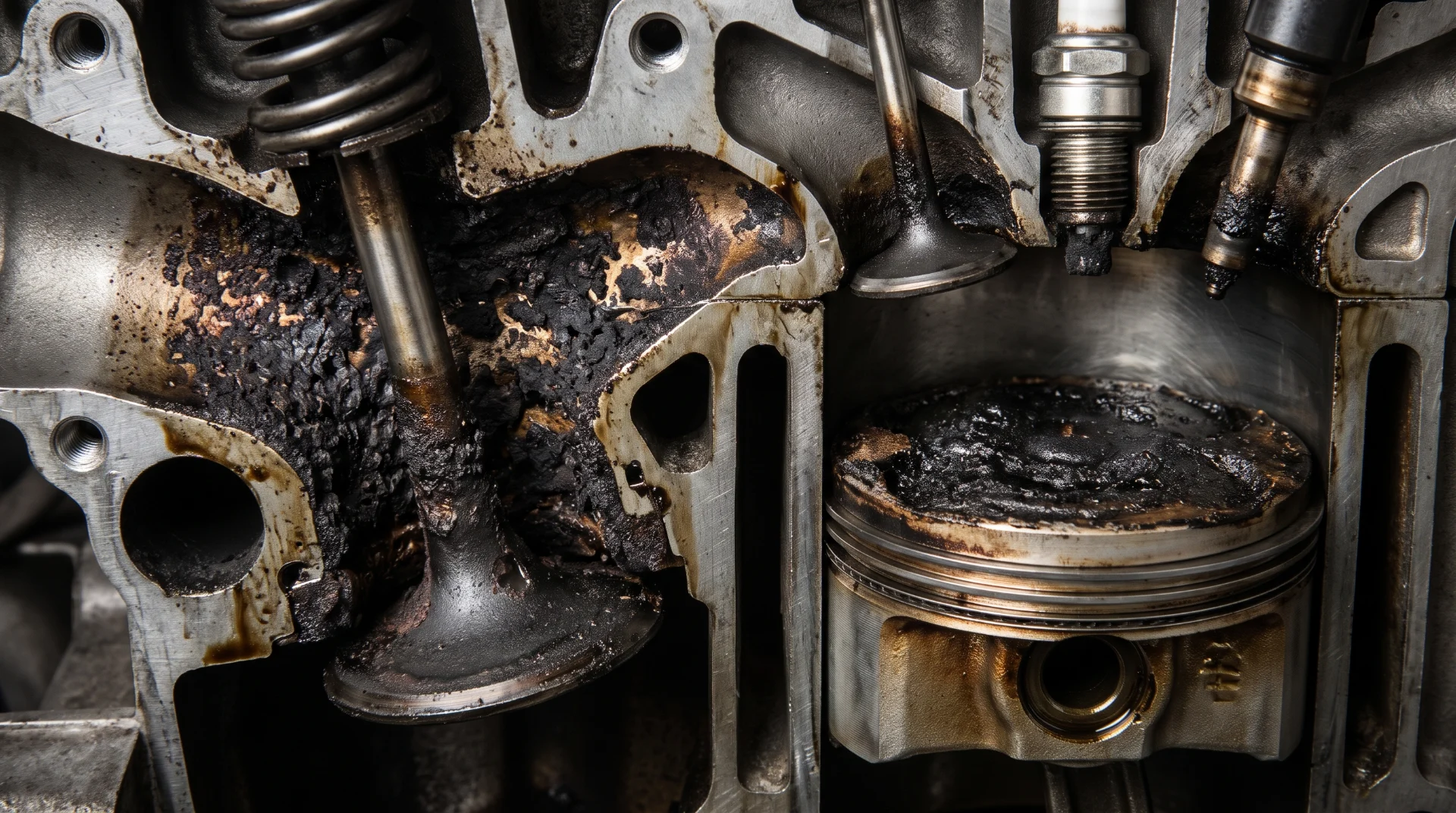
For most car owners, after driving a vehicle for a few years or reaching higher mileage, a common set of problems begins to surface: the car feels sluggish when accelerating, fuel consumption climbs without explanation, and the engine starts to vibrate subtly while idling.
When taken to a workshop, mechanics almost always deliver the same diagnosis: "Your engine has heavy carbon deposits and needs a thorough clean."
So, how exactly does carbon build up inside an engine? Which cleaning method on the market is truly reliable? And how should you handle daily maintenance and prevention scientifically? This article objectively breaks down the pros and cons of mainstream decarbonization methods to help you choose the safest and most cost-effective solution for your vehicle.
I. What Are Engine Carbon Deposits and How Do They Form?
Simply put, carbon deposits are stubborn gummy and micro-carbon residues produced by the incomplete combustion of fuel and motor oil under high temperatures.
As long as an internal combustion engine runs, microscopic hydrocarbon leftovers are practically inevitable. Over time, these residues harden and cling to three vital engine components:
- Fuel Injectors: Distorts the fuel spray pattern, preventing petrol from mixing evenly with air and causing combustion efficiency to drop sharply.
- Intake Valves: Restricts fresh airflow into the combustion chamber, increasing intake resistance and causing sluggish performance.
- Combustion Chambers & Piston Crowns: Long-term buildup alters the cylinder's compression ratio, easily triggering engine knocking or a decline in power output.
Why do some vehicles accumulate carbon much faster than others?
This is closely tied to daily driving conditions. In urban commuting, frequent stop-and-go traffic, prolonged idling at traffic lights, short trips (turning off the engine before it reaches normal operating temperature), and long-term low-speed cruising all lead to incomplete fuel combustion—creating the ideal environment for rapid carbon buildup.
II. Common Warning Signs: Does Your Engine Need Cleaning?
When your vehicle begins to show the following symptoms, carbon deposits have usually accumulated enough to interfere with normal engine operation:
- Noticeable Increase in Fuel Consumption: The same amount of petrol yields a visibly shorter driving range.
- Sluggish Throttle & Weak Acceleration: Delayed power delivery when pressing the accelerator, reducing confidence when overtaking or climbing hills.
- Difficult Cold Starts or Rough Idling: Struggling to start in the morning, accompanied by regular or irregular cabin vibrations while idling.
- Stronger Exhaust Odors: Unburnt fuel vapors causing pungent smells from the tailpipe or failed emission inspections.
III. Pros & Cons of Mainstream Carbon Cleaning Methods
Currently, the automotive aftermarket offers three common approaches to tackling carbon deposits:
1. Traditional Physical Disassembly (Engine Overhaul / Deep Cleaning)
- How It Works: Dismantling core components such as the cylinder head and intake manifold to physically scrape, soak in specialized solvents, or walnut-blast carbon deposits directly off the metal.
- Pros:
- Most Thorough Visual Clean: Directly restores bare metal shine even on years-old, rock-hard carbon buildup.
- Immediate Results: Airflow paths are completely cleared upon reassembly.
- Cons:
- Time-Consuming & Expensive: Involves complex labor; costs easily run into thousands of ringgit and require leaving the car at the workshop for days.
- Reassembly & Sealing Risks: Repeated disassembly demands strict gasket sealing and bolt torque precision. Improper reassembly can lead to future oil or air leaks.
2. Intake Manifold IV Drip / Hydrogen (HHO) Decarbonizing
- How It Works: Feeding chemical cleaning fluid through the intake manifold vacuum while idling to soften carbon, or using an HHO machine to electrolyze water into hydrogen-oxygen gas for high-temperature catalytic carbon removal.
- Pros:
- Quick Turnaround: No engine disassembly required; typically completed in 30 to 60 minutes at a workshop.
- Moderate Cost: Significantly cheaper than a full mechanical overhaul.
- Cons:
- Limited Coverage: Solvents mostly pass through the intake tract and burn away quickly upon entering the hot combustion chamber, offering limited cleaning on stubborn piston top crusts.
- Downstream Risks: Large dislodged carbon flakes can travel into the hot exhaust pipe, risking clogs or damage to oxygen sensors and the catalytic converter.
3. High-Quality Fuel Enhancers (Daily Dynamic Cleaning & Protection)
- How It Works: Pouring a concentrated active formula into the fuel tank before refueling. It circulates dynamically with petrol through the fuel injectors, intake valves, and combustion chamber to gently dissolve and purge carbon during normal driving.
- Pros:
- Effortless & Convenient: No workshop visits needed; simply pour in a bottle whenever you refuel.
- Full Fuel-Path Coverage: Provides continuous cleaning and anti-wear care from the fuel tank, pump, and injectors all the way to the piston crowns.
- Prevents Regrowth: Quality formulas form a protective barrier on metal surfaces to inhibit new carbon from adhering.
- Cons:
- For severely neglected, older engines with near-choked hardened deposits, a single bottle cannot clear everything instantly; it requires a complete treatment cycle to take full effect.
IV. Comparison of Mainstream Carbon Cleaning Methods
| Cleaning Method | Cleaning Coverage | Convenience | Cost per Session | Anti-Carbon Protection | Part / Sensor Risk |
|---|---|---|---|---|---|
| Physical Overhaul | Very deep (disassembled parts only) | Very low (days in workshop) | High (RM 1,000+) | None (stops once cleaned) | Moderate to high (sealing risks) |
| Intake IV Drip | Intake manifold & valves | Moderate (workshop appointment) | Moderate | None | Moderate (catalytic converter load) |
| HHO Machine | Combustion chamber & exhaust | Moderate (specialized equipment) | Moderate | None | Low to moderate |
| High-Quality Fuel Enhancer (e.g., BioFuel) |
Full dynamic fuel-path coverage | Very high (pour in before refueling) | Economical | Microscopic anti-wear barrier | Zero risk (lab-tested compatible) |
V. Daily Dynamic Maintenance: Taking BioFuel as an Example
Traditional carbon cleaning is often reactive—waiting until the car suffers severe hesitation or power loss before spending heavily at a workshop. Modern scientific car care advocates "proactive dynamic maintenance": using a reliable fuel enhancer during regular refueling to keep carbon buildup under control from the start.
Taking BioFuel—formulated specifically for local climates and driving conditions—as an example, a quality plant-based fuel enhancer offers the following advantages in daily maintenance:
1. Gentle Full-Path Stripping Without Harming Seals
Unlike harsh acid or alkali chemical flushes, a gentle plant-based formula offers high component compatibility. Flowing evenly with petrol through injectors, intake ports, and piston surfaces, it uses molecular penetration to soften stubborn deposits into fine particles that exit smoothly through normal exhaust flow—avoiding large flakes that could clog the catalytic converter.
2. Optimized Fuel Atomization for Restored Efficiency
Carbon buildup is a silent thief of fuel efficiency. While breaking down deposits, the formula improves fuel surface tension, allowing injectors to spray a finer, more uniform mist. More complete combustion directly reduces throttle lag, restores responsive power, and helps lower fuel consumption and black smoke emissions.
3. Cleaning + Anti-Wear Lubrication to Inhibit Regrowth
Without protection after cleaning, bare metal surfaces quickly attract fresh carbon in stop-and-go city traffic. While cleaning surface particles, the formula leaves a microscopic anti-wear protective layer between piston rings and cylinder walls, reducing mechanical friction for a quieter engine while blocking new gummy deposits.
4. Backed by Independent Third-Party Testing
When choosing a fuel additive, credible verification matters. For instance, BioFuel has undergone testing and validation by recognized bodies including SIRIM, the Universiti Sains Malaysia (USM) Engine Laboratory, PUSPAKOM emission tests, and Speedworks dynamometer power tests, ensuring safety and compatibility with engine components.
VI. Scientific Car Care: Recommended Maintenance Cycle
To keep your engine running in a healthy, low-carbon state over the long term, follow a structured maintenance cycle:
- Deep Cleaning Phase (Restoring Engine Vitality): For vehicles that have never undergone fuel-system maintenance, it is recommended to use 14 consecutive bottles (1 bottle poured before each full tank). Within the first 3 bottles, drivers typically notice smoother, quieter idling, reduced vibration, and lighter acceleration.
- Routine Long-Term Care (Maintaining Peak Performance): After completing the deep cleaning cycle, switch to 1 to 2 bottles per month to continuously resist new carbon buildup during daily congested commutes, keeping power smooth and fuel economy steady.
Conclusion
Engine carbon buildup is a natural byproduct of driving, but "prevention is better than cure" remains the golden rule of car care. Rather than waiting for severe deposits to drain your engine's power and force a costly overhaul, incorporating dynamic cleaning and protection into your regular refueling routine saves time, cuts repair costs, and keeps your car feeling responsive for years to come.
Ready for Effortless, Science-Backed Daily Engine Care?
Explore or order BioFuel through our official channels:


